Research and Writing

Research and Writing


Hello. This blog is the part of Thinking Activity task assigned by Prakruti ma'am of the Unit 1 of Reserch Methodology. In this blog I will deal with the topic of my research, paraphrase, and types of research. 

 Que. 1 : In your opinion, should research always strive to achieve something new and creative or is it ok to pursue an existing direction and arrive at newer understanding of the same? In which one of these two categories would you classify the topic that you have chosen for your dissertation?


According to me, research is both about achieving something new and creative and pursuing an existing direction and arriving at a newer understanding of the same. It depends on the context, field, and the subject which way is best suited. Additionally, no matter whether it's new and creative or within an existing field, it depends on the researcher. Even the newest and most creative research has some traces in the past about its beginnings that can help one to pursue the field.


In the case of my topic, the primary text is Waiting for Godot, which is already explored. However, the theory or rather approach I have chosen is literary analysis through chatbots. Chatbots have been recently developed, and how they help in analyzing literature is the area of concern. My research falls under the second category in terms of the primary text, however, the method I have chosen is creative, new, and also emerging.


Que.2 : Ask a chatbot of your choice to paraphrase the following passage. Check the paraphrase it gives you by answering the questions attached below the paragraph: 

"There is little to be gained from seeking to isolate any artistic form or movement from its antecedents and counterparts. Myopia is the product of critical segregation, wherein readers disengage practices from those contexts that have forged their contours. This might seem obvious, but there is value in rearticulating the axiomatic in times of transformation--when something "new" emerges, many of us fall into the trap of isolating our darlings, whether old or young, from all those other contexts that play a significant role in their construction. How does one look at electronic literature without considering the literary, the ludic, that which we can see, touch, and hear---how does one look critically at anything without such frames of reference, and how do we overcome natural limitations in capacity when attempting to do so? The best we can do is look to those who have gone before, build upon their foundation, and indeed, emphasize those aspects of an exploration we deem worthy of greater emphasis." (Sullivan)


The text paraphrsed by Gemini. 

Understanding any art form requires examining its historical and contemporary connections. Isolating art from its influences leads to a limited and narrow perspective. While this might seem self-evident, it's crucial to reiterate this principle, especially when new art forms emerge. We often mistakenly separate these novel creations from their historical and cultural contexts. For instance, how can we truly grasp electronic literature without considering traditional literature, games, and other sensory experiences? Critical analysis demands a broad perspective, encompassing all relevant influences.

Overcoming our inherent limitations in understanding requires building upon the work of past scholars and emphasizing the most significant aspects of the art form under investigation.


After receiving the bot's response, answer the following questions:


1) Is the paraphrase approximately the same length as the original passage?

Yes the passage's length is almost same and it also clarifies the zest of the paragaraph. 


2) Has any part of the passage been copied word for word?

Not truly but the part of the example of Electronic literature is put as it is to keep the meaning of the text. 


3) Does the paraphrase have the same meaning as the passage?

It has probably the same meaning as the paragraph. Some of the examples and metaphors has removed while paraphrasing because they may create the hurdles in understanding the meaning of the text. By paraphrising the passage the meaning and the central idea more clarifies.


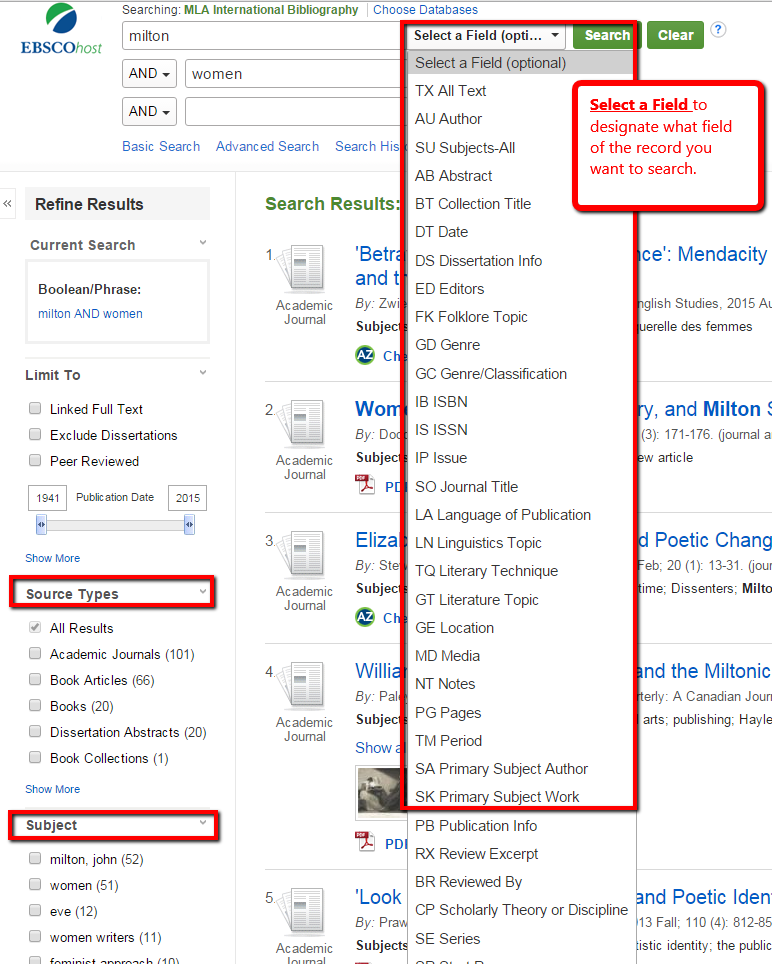
Que. 3 : What is the full form of CIS? Discuss some of the types of searches which can be employed to search for sources in a library equipped with CIS.


CIS means Central Information System in research methodology. Searching a Reference Database is important task. There are multiple versions available for searching the sources for the research. Primarily there are two versions.


(LibGuides: Introduction to Library Research - Overview of the Research Process: 3: Find Materials, n.d.)


1. Electronis : 

The MLA International Bibliography is published in online and CD-ROM versions, which contain all citations published in annual volumes of the bibliography from 1926 to the present.Therefore,while an annual print volume of the MLA International Bibliography lists around 67,000 titles, the electronic versions offer information on more than 2,000,000 titles.(America, 2009) This version is easy to access from any places. 

2. Print 

The printed library edition of this work is published annually in two clothbound books. The first contains listings in five areas: literature in English, literature in other languages, linguistics, general literature and related topics, and folklore. The second book provides a subject index to the first.(America, 2009)

Now let's jump into the types of research in Electronic version. 

According to MLA handbook of 7th edition below given are the types of search.

1.First by searching the name of the author directly. For example my text is Waiting for Godot then by searchinf the Samuel Beckett.

2. Second is by searching the title.

3. By searching the subject matter like polyphony of voices in the Waiting for Godot.

4.In expanded search one may brodly search for the themes and topic. For example, by using postmodernism, fragmantation, absurd play, and so on and so forth. 


(Stetson, n.d.)


5. Publication information
6.Call Number (You’ll need this information to find the book on the library shelves.)

7. Boolean searches :


(Research, Citation, & Class Guides: Search Strategies: Boolean Operators, n.d.)


The electronic MLA International Bibliography also permits searching according to Boolean logic-named after the nineteenth-century British mathematician and logician George Boole. In this kind of searching, you customize your search request with the operators and, or, and not. 

In this one may use "And" for example, using the word " Waiting for Godot and Deconstruction". By using "OR" Deconstruction or Structralism. Lastly, by using "NOT" Waiting for Godot not Myth of Sisyphus. 

I hope this information may help you.

Thank You. 

References : 

America, M. L. a. O. (2009). MLA Handbook for Writers of Research Papers.

LibGuides: Introduction to Library Research - Overview of the research process: 3: Find materials. (n.d.). https://iu.libguides.com/howtoresearch/find-resources

Research, Citation, & class guides: Search Strategies: Boolean Operators. (n.d.). https://libguides.uww.edu/boolean

Stetson. (n.d.). Guides: MLA Bibliography Database: How to use it: Advanced Search Tips. https://guides.stetson.edu/c.php?g=431309&p=2942670




River of Stories

River of Stories by Orijit Sen 


Hello Readers, 

I recently completed my another graphic novel, first was Corridor. It you haven't read it, here I am adding the link. 
So, let me throw some light upon this graphic novel which is considered to be first Indian Graphic novel. River of Stories is a graphic novel written and illustrated by Indian artist Orijit Sen.Often considered India's first graphic novel, it tells the story of the environmental, social and political issues surrounding the construction of the controversial Narmada Dam. It was published in 1994 with the help of a small grant from Kalpavriksh, an NGO. Two years after it was first published i.e. in 1996 it went out of print. But is being released in a new edition by Blaft Publications in 2022, with a foreword by Arundhati Roy. I read the edition of 2022. 

It is a quick read for me personally because I recently studied postcolonialism. However, back in 1994, the graphic novel was still a very new concept in India. It was not easy for Orijit to go on with his mission of capturing the imagination of the urban reader. The book delves into the idea of encroaching on the land of the people. As Ania Loomba states in her book "Colonialism and Postcolonialism," the new concern of postcolonialism is the idea of tribal displacement. Even P Sainath goes further and states in his book "Then There is the Market" about St. Growth and St. Development.


Parallel thread on Adivasi myth : 
The book also has a parallel thread running through the pages, where Orijit reverts to the Adivasi myth about the river Reva (Narmada), beginning from the story of Kujum Chantu who created the world in her palms and gave it life. The stories are sung by a singer called Malgu Gayan. Orijit says it came from the loads of research he did about the Narmada valley. He has the habit of doing that before starting something, he says, digging into local culture, history, folklore and whatever is relevant to his storytelling. In a strange way, Orijit gets away with presenting this myth as a sort of alternative thinking.


This book is perfect gateaway to understand the postcolonialism. Especially the context of Narmada Bachao Andolan and the importence of the telling story as Chimamda Adichi said. I recommend you to give your time. 

Guess what I have brought for you the archival version of the book. So now you can also read it. 


That's all from my side. We will meet in next review.

Thank You. 


Sunday Reading : Words of the Year

 Words of the Year : Brainrot and Manifestation


This blog is the part of sunday reading task given by Dilip sir on the topic "Thinking Activity: Exploring the Words of the Year 2024 | Brain Rot and Manifest " In this blog I am going to reflect upon the words of the year given by Cambridge and Oxford. Moreover, I will analyse the word in its social and cultural context along with the role of the language. 

In the Poetics Plato talked about the Phonocentricism and Logocentricism. Afterwards Post-structuralist Derrida, Heidger, Paul De Man and others talked about the role of the language in shaping reality. At the same time they said that language has inherent disability to express wholly the ideas. However, language is the only medium through which the shaping of the reality happens. 

The role of words especially given by Oxford and Cambrigde showcase the significance of the words in all over the world. As Structuralist Fradinad de Saussure said that meaning can only possible in the context. The interdependence of the signifier and signified shapes the reality. Similarly, both words given here have different meaning across different culture, society and continent. 


Oxford Word of the Year: "Brain Rot"


According to Oxford University Press, "‘Brain rot’ is defined as “the supposed deterioration of a person’s mental or intellectual state, especially viewed as the result of overconsumption of material (now particularly online content) considered to be trivial or unchallenging. Also: something characterized as likely to lead to such deterioration”. The first recorded use of ‘brain rot’ was found in 1854 in Henry David Thoreau’s book Walden, which reports his experiences of living a simple lifestyle in the natural world.


The language is not static and fluidity of it make the same word appeare different by the time. The word brain rot has different meaning as we had seen in the time of the Henry David Thoreau now in the digital age it altogether change the context. Nowadays with the emergence of the social media the brain rot process happens a lot. The first process is to find a misinformation, disinformation and fake news. 


In this video the neurology and psychology of the Brain Rot is reveled. Your brain is going through a dopamine Loop so as you are finishing watching a reel your mind is building up anticipation of what the next reel is going to be and your dopamine levels are spiking and the only way to get a reward is to scroll up watch the next reel as soon as the next reel starts your dopamine levels fall and you you get a sense of happiness or satisfaction but as that reel is ending again there is a buildup of anticipation and the only way to get the next reward is to scroll up again this Loop is going on in your limbic system which is the Primitive part of your brain without any say from your prefrontal cortex or your conscious free will self in other words you are caught up in a lyic loop and that is what we call Brain rot because you don't have any conscious control in it.

Now let us analyse cultural and societal significance of the word. As being Gen Z we are the people who had the highest screen time. The more danger however lies in the generation which reaches at their 40s and 50s. The rottenness happened their a lot that they while being the victim of the brain rot spred the same rottenness. For example, during the corona time the misinformation spread a lot regarding home remedies. 

Additionally, spreding of the home remedial medicines of the danger disease like cancer. The social media manipulate the real information on the name of making it "Simpler". Nonthless this leads to the spreding of that half-truth. I have seen the aged people believed in the certain pooja and rituals which was randomly shared by any unknown youtubers. Their weird ritual like not washing the hands in the dish after mill becuase it's the inreverence, not putting the broom in front of people's eyes etc. 

It doesn't stop there it goes further when people believe Newton hasn't developed the gravitation because apple can not fall from the tree. The aeroplane was developed ways back in India we have the proof of "Pushpak Viman". Bollywood is from the beginning reflecting leftist ideas so on and so forth. 

Here let me clarify that the language has the pivotal role. Through the usage of language the rotting happens. And yes the echo chember of the social media time and again presents the same kind of information, this leads to the reinforment of the informantion consume by the users. 


Cambridge Word of the Year: "Manifest"


“Manifesting is what psychologists call ‘magical thinking’ or the general illusion that specific mental rituals can change the world around us," said Cambridge University social psychologist Professor Sander van der Linden, author of The Psychology of Misinformation. With the book of Rhonda Byrne "The Secret"  the idea grown up. Especially I got the book as the birthday gift and let me tell you I do believe at first in this. After coming into the department my own view regarding the manifestation. 


Manifesting, or the process of creating something through thought alone, is often associated with spirituality and pseudoscience. The idea is that through visualization, affirmations, and other similar techniques, you can turn your thoughts into reality.

Though, the word has positive conotation deeply it has the illusion. As people believe in the idea of the manifesatation it leads to development of numbers of theory regarding success. For example, manifestation of the successful career, relationship, love life, and life style. The numbers of Baba and professional people emerges with their startegies for this. If we look at the ieda of religion than there is direct connection with it. 

Manifestation often makes people believe in "Outcome without process". The process of manifesting the ideas rather then putting into the action. Simon de Bour . Simon de Beavouir said that Existence precede essence” The karma theory also fall under this category where the idea of essence precede existence. This make people feeble where they are not ready to take responsibility of their action. They merely manifest or think about the success. 

As Sahrukh made this famous dailouge,

" 'कहते हैं किसी चीज को अगर शिद्दत से चाहो तो पूरी कायनात उसे तुमसे मिलाने की कोशिश में लग जाती है. "

 which consciously or unconsciously lies in the mind of the people. Some magical elements associated with this which make human the secondary in the action. This also leads to take no responsibilty and telling, "Sab manifestation se hoga" Just one search in the youtube or Google "Manifestation" and numbers of authentic inauthentic materials related to it. This is enough to prove that how this word shapes the discourse in and around the word. 

I hope you enjoyed reading the blog. 

For further reading : 


Thank you.

Words : 1189

References : 

Heaton, B. (2024, December 2). ‘Brain rot’ named Oxford Word of the Year 2024. Oxford University Press. https://corp.oup.com/news/brain-rot-named-oxford-word-of-the-year-2024/

‘Manifest’ is Cambridge Dictionary Word of the Year | University of Cambridge. (n.d.). https://www.cam.ac.uk/news/manifest-is-cambridge-dictionary-word-of-the-year


Corridor by Sarnath Banrjee

 Corridor by Sarnath Banrjee

Hey there, bookworms! 


I recently dove into a graphic novel, Corridor by Sarnath Banerjee. And let me tell you, it was a wild ride!  This Indian comic book is a unique blend of humor, philosophy, and pop culture. It follows the quirky Jehangir Rangoonwalla, a tea-dispensing, wisdom-sharing bookseller in Delhi's Connaught Place. 


The story is packed with interesting characters: Brighu, the adventure-seeking romantic; Digital Dutta, the conflicted Marxist; and Shintu, the newlywed on a quest for love potions. These characters are constantly referencing famous works like Double Helix and the Beat Generation, making the novel a fun intellectual journey. 


Banerjee's illustrations are vibrant and full of life, perfectly complementing the witty dialogue and thought-provoking themes. It's a visual feast that keeps you engaged from start to finish. Sarnath Banerjee's "Corridor," the first Indian novel written entirely in comic-book style, is set for a reprint after its first 2,000 copies were snatched up by booksellers within just one month.

"He is a bit like me. He loves gathering trivia and knows obscure things like the way Marx preferred his eggs and details of Mick Jagger's constipation," said Banerjee -- who bears an uncanny physical resemblance to his fictional character.

If you're looking for a fresh and exciting reading experience, I highly recommend Corridor. It's a must-read for fans of graphic novels and anyone who appreciates a good story. 


Recommending you the book.


Thank You for your time.


A Cultural Analysis of Frankenstein

 A Cultural Analysis of Frankenstein


This blog is the part of thinking activity, which is designed for an in-depth exploration of Mary Shelley's Frankenstein through the lens of cultural studies. The discussion is divided into two main parts: 

1. Revolutionary Births 

2. The Frankenpheme in Popular Culture: Fiction, Drama, Film, Television.

Each part invites us to critically analyze and reflect on how the themes and elements of Frankenstein intersect with cultural, philosophical, and political ideas, both in the context of the novel’s time and in contemporary society.

For background of Worksheet visit here :

Teacher's Worksheet


The Creature as Proletarian : 


"Frankenstein" has become a vital metaphor, peculiarly appropriate to a culture dominated by a consumer technology, neurotically obsessed with "getting in touch" with its authentic self and frightened at what it is discovering." 

(Levine, “the Ambiguous Heritage of Frankenstein”)

The Creature in Frankenstein is like a real-life social movement. Just like the Dalit Panther movement fought for the rights of the Dalit community in India, the Creature also struggled for recognition and respect. Both faced rejection and violence from society.

The Maoist movement in India, especially in remote areas, is similar to the Creature's anger against being neglected and exploited. Both the Maoists and the Creature are seen as violent threats, even though their actions come from a place of suffering and injustice.

The struggles of the working class, especially highly educated people who can't find good jobs, mirror the Creature's frustration at being cast aside despite his potential. This systemic failure drives people to actions and movements that call for change.


The Black Panther movement's focus on self-defense and community empowerment is similar to the Dalit Panther movement and the Creature's journey from silent suffering to organized resistance. Both movements show the transition from helplessness to empowered assertion of rights.


A Race of Devils :


Mary Shelley's Frankenstein is more than a tale of horror; it's a powerful allegory for the complex dynamics of race, empire, and privilege. The relationship between Victor and the Creature mirrors historical and modern struggles for power, identity, and acceptance.

The Creature, a marginalized "Other," faces societal rejection and isolation, much like African slaves and other oppressed groups throughout history. His transformation from innocent to vengeful reflects the psychological impact of systemic oppression. This parallels the experiences of women, especially marginalized women, who face intersectional discrimination.


Victor's act of creating life without the natural process of childbirth symbolizes patriarchal dominance and a desire to control both life and the feminine realm of reproduction. Particularly it is known as "Wombenvy".  This parallels the colonial mindset of exerting control without nurturing or accountability, leading to exploitation and subjugation.


Victor's behavior toward the Creature echoes that of a colonial master who creates a subject but fails to educate or integrate them. This mirrors the historical practice of leaving colonies in a state of dependency and disorder, a pattern evident in the aftermath of colonialism and in recent events like the U.S. withdrawal from Afghanistan.


Shelley's novel resonates with contemporary critiques of privilege and systemic racism. The Creature's experience highlights how privilege operates, marginalizing those who don't conform to dominant cultural standards. This reflects the ongoing struggle for inclusion and justice faced by marginalized communities worldwide.


Frankenstein is a timeless exploration of power, identity, and the consequences of unchecked ambition. It serves as a cautionary tale about the dangers of creating without responsibility and the importance of empathy and understanding in a world marked by inequality and injustice.


From Natural Philosophy to Cyborg :


Mary Shelley's Frankenstein warns us about the dangers of unchecked scientific ambition. Victor Frankenstein's creation of life highlights the ethical and societal risks of overreaching science.

Genetic engineering and cloning raise concerns similar to those in Frankenstein. Techniques like CRISPR can be used to create "designer babies," raising ethical issues around eugenics and inequality.  Consequently leads to "Biological Elitism" This could lead to a genetically enhanced elite, exacerbating existing social divides.

Eugenics is an immoral and pseudoscientific theory that claims it is possible to perfect people and groups through genetics and the scientific laws of inheritance. Eugenicists used an incorrect and prejudiced understanding of the work of Charles Darwin and Gregor Mendel to support the idea of “racial improvement.”(“Eugenics: Its Origin and Development (1883 - Present)”)


Frankenstein also warns us about the dangers of AI. Creating highly advanced AI raises questions of accountability, autonomy, and the potential for AI to surpass human control. We must ensure that AI development aligns with human well-being.


Shelley's novel teaches us that scientific innovation must be accompanied by ethical consideration. We must establish guidelines to ensure that technologies are used for good and not to deepen social divides.


In the context of genetic engineering, this means establishing ethical guidelines that ensure technologies are used to uplift rather than deepen social divides. In AI, it means creating fail-safes and ethical programming that align AI development with human well-being rather than mere profit or power.


The Frankenpheme in Popular Culture :


First Film Adaptation and Popular Retellings :

Mary Shelley's Frankenstein is still relevant today because it keeps getting adapted into different forms like movies, plays, and books. The story's themes of ambition, isolation, and the dangers of science continue to resonate with people.

Early film adaptations of Frankenstein introduced themes of psychological duality and self-alienation. These films helped make the story popular and relevant. Iconic films like James Whale's Frankenstein (1931) and Bride of Frankenstein (1935) shaped how people see the Creature and the story.


Frankenstein has also influenced experimental cinema. Films like Bill Morrison's Spark of Being use old film footage to create new stories, similar to how Victor Frankenstein creates the Creature from parts. This reflects the themes of creation, decay, and resurrection in Shelley's novel. Contemporary adaptations, such as Mary Shelley's own sequel The Last Man and films like Splice and Ex Machina, continue to explore the ethical implications of scientific pursuit. These retellings often delve into themes like genetic engineering, artificial intelligence, and the blurred lines between creation and destruction.


Frankenstein continues to be relevant because its themes resonate with modern anxieties about technology and humanity. The Creature's struggle for acceptance reflects our concerns about otherness and technological isolation. The story also warns us about the dangers of unchecked scientific ambition, which is relevant to current advancements in fields like genetic engineering and artificial intelligence.


Frankenstein is also relevant to young people. Adaptations for children and young adults focus on themes of belonging and self-discovery, making the story accessible to a new generation. Especially on the bases of the ability young generation face the struggle of comparison with others similar to creture. 


Even in digital culture, Frankenstein is still relevant. Memes and online discussions show how the story continues to be shared and interpreted by people. The Creature's desire for acceptance is a theme that still resonates with people today.


Frankenstein is a timeless story that continues to inspire and challenge us. Its themes of ambition, isolation, and the dangers of science are as relevant today as they were when the novel was first published.


Reading and Analysis :


The Creature's literary education is a complex and paradoxical experience. While it expands his mind and offers him a glimpse of human potential, it also deepens his isolation and fuels his resentment. Books like Paradise Lost, Plutarch's Lives, and The Sorrows of Werter expand the Creature's knowledge and understanding of the world. He learns about human history, culture, and emotions.


"  Fortunately the books were written in the language, the elements of which I had acquired at the cottage; they consisted of Paradise Lost, a volume of Plutarch’s Lives, and the Sorrows of Werter. The possession of these treasures gave me extreme delight; I now continually studied and exercised my mind upon these histories, whilst my friends were employed in their ordinary occupations."

(Frankenstein; or, the Modern Prometheus)


The Creature's reading of Paradise Lost highlights his complex relationship with both God and Satan. He identifies with Adam's isolation, but he also feels a kinship with Satan's rebellious spirit. This dual identification further complicates his sense of self and his place in the world.


“I can hardly describe to you the effect of these books. They produced in me an infinity of new images and feelings, that sometimes raised me to ecstasy, but more frequently sunk me into the lowest dejection."

(Frankenstein; or, the Modern Prometheus)

The Creature's reading of Plutarch's Lives introduces him to the world of politics and leadership. He admires the peaceful lawgivers like Numa, Solon, and Lycurgus, and he develops a strong sense of justice and morality. However, his own monstrous appearance and social isolation prevent him from participating in the world he so admires.


He feels a deep sense of loneliness and longing for connection. Reading about the happiness and fulfillment of others, like Adam in Paradise Lost, intensifies the Creature's feelings of envy and resentment. He questions his own existence and purpose.


 ‘The path of my departure was free,’ and there was none to lament my annihilation. "

(Frankenstein; or, the Modern Prometheus


The Creature's literary education, while empowering him intellectually, ultimately exacerbates his feelings of alienation and despair. As he becomes more aware of the world around him, he also becomes more acutely aware of his own difference and his inability to belong. This leads to a deep sense of loneliness and a growing resentment towards humanity.


Film and Media Reflection :


Blade Runner (1982): This sci-fi masterpiece explores themes of artificial intelligence, identity, and the nature of humanity. The replicants, created by humans, are often compared to the Creature in Frankenstein, as both are beings who question their existence and seek meaning in a world that rejects them.


Ex Machina (2014): This film delves into the ethical implications of creating artificial intelligence and the potential dangers of unchecked scientific ambition. The creation of Ava, a highly advanced AI, echoes Victor Frankenstein's creation of the Creature.


Hindi Adaptations : 


Robot (2010) and Robot 2.0 (2018): These Rajinikanth-starrers blend science fiction, action, and romance. While they don't directly adapt the Frankenstein narrative, they share similar themes of artificial intelligence, human creation, and the ethical implications of technological advancement. The robots in these films, particularly Chitti, are often seen as modern-day versions of the Creature, grappling with their identity and place in society.

Ra.One (2011): This superhero film, directed by Anubhav Sinha, draws inspiration from various sources, including Frankenstein. The character of Ra.One, a powerful video game villain brought to life, can be seen as a modern-day interpretation of the Creature. The film explores themes of good versus evil, the nature of creation, and the consequences of playing God.

Ghost Machine:

The first one is about babysitter robot who becomes so obsessed of the child that murders the murder.Director: Kim GokCountry & year: South-Korea, 2016.


The iMOM:


A narrative about a robotic mother figure and its interactions with a family. 

Anukul : 


A tale involving a robot in a domestic setting.

These films, along with many others, show us that humans have a deep-rooted fear of AI and robots. We often create stories that warn us about the dangers of technology, even though it's something we humans have created.


This fear is not new. We've always been scared of monsters, whether they were wolves, mythical creatures, or powerful humans. These stories, like those in the Ramayana and Mahabharata, teach us to be cautious and avoid danger.


In the modern world, our fears have shifted to machines and AI. We worry about robots becoming too powerful or losing control. These films reflect our anxieties about the future and the potential consequences of our technological advancements.


Thank You. 


I would like to acknowledge the assistance of ChatGPT, an AI language model developed by OpenAI, for providing insightful suggestions and facilitating the organization and expression of original thoughts and concepts in the preparation of this work.


References : 

Barad, Dilip. “Thinking Activity: A Cultural Studies Approach to Frankenstein.” Reserchgate, Nov. 202AD, https://doi.org/10.13140/RG.2.2.24589.76005.

Barad,Dilip.  Why Are We so Scared of Robots / AIs? blog.dilipbarad.com/2019/03/why-are-we-so-scared-of-robots-ais.html.


“Eugenics: Its Origin and Development (1883 - Present).” Genome.gov, www.genome.gov/about-genomics/educational-resources/timelines/eugenics.

Frankenstein; or, the Modern Prometheus. 5 Nov. 2024, www.gutenberg.org/cache/epub/84/pg84-images.html.

Levine, “the Ambiguous Heritage of Frankenstein.” knarf.english.upenn.edu/Articles/levine.html.

Lobdell, None. “Never Dead: Mary Shelley’s ≪Em≫Frankenstein≪/Em≫” Science Fiction Studies, vol. 47, no. 2, Jan. 2020, p. 253. https://doi.org/10.5621/sciefictstud.47.2.0253.